
Faculty Development
Approach to Faculty Development
When someone asks me what I do, typically the conversation goes something like this:
Acquaintance: “What do you do for a living?”
Me: “I work in faculty development.”
Acquaintance: “In what?”
Me: “In faculty development. I basically help faculty become better teachers.”
Acquaintance: “So, you’re like a teaching coach?”
Me: “I’m sort-of like a coach. I develop programs, teach workshops, meet with faculty to discuss their courses and their teaching.”
Acquaintance: “Oh okay. <turns to another person> Let me introduce you to Arturo. He’s a teaching coach.”
In some ways, I am a coach. Much like a sports coach with his or her players, one of my goals is to empower faculty to be great teachers by helping them showcase their existing skills and competencies while assisting in their continued development.
However, it is my core belief that faculty development should encompass all aspects of a faculty member’s professional and personal growth. In addition to providing guidance regarding teaching and learning, faculty developers must provide professional development opportunities in areas such as:
- student advising and retention
- preparing for tenure and promotion
- work-life balance
- campus culture
- leadership development
- social events
As evidenced in the sections below, that belief continues to shape my work as a faculty developer.
Workshops
- Connection + Empathy + Persona = Community: A Formula for Cultivating a Supportive Online Environment
- Creating a Student-Centric Syllabus: Policies, Processes, and Accessibility
- Providing Deep and Meaningful Feedback with 3 Blackboard Tools
- Opening Communication Channels with Students Using Social Media
- Keys to effective web-assisted courses workshop
- Getting the most out of your student learning outcomes
Workshop topics include:
- Online Course Instruction
- Web-assisted and Blended Learning
- Student-centered Learning
- Learning Space Design
- Learning Outcomes
- Social Media
- Teaching with Technology
Workshop data:
| 2014 | 2015 | 2016 | |
| total workshops presented | 14 | 20 | 30 |
| average participant rating | 3.8/4.0 | 4.5/5.0 | 4.2/5.0 |
| total number of participants | 45 | 79 | 124 |
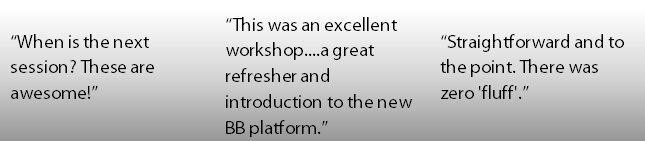
Faculty comments regarding workshops:
Programs
Below are examples of programs I established in collaboration with colleagues:
Digital Badges for Faculty Development (2013)

Program Description:
Parker’s digital badge initiative is an opportunity for faculty and staff to earn and collect a variety of digital badges. Digital badges symbolize accomplishments, skills and competencies, or best practices for teaching. Badges serve as evidence that faculty may share publicly on sites such as LinkedIn or Facebook. Parker Badges offer a fun way to recognize faculty and staff for their contribution to our unique culture and promote learning-centered experiences and lifelong learning.
Key Roles & Responsibilities:
- led institutional support efforts for the project
- led the badge site infrastructure development and design
- collaborate with the Director of the Center for Teaching and Learning to design the badge ecosystem
- collaborate on digital badge research efforts
Learning Space Redesign (2013-present)
The learning space initiative began with the redesign of a traditional computer training lab to an adaptive learning lab. Focused on the needs of today’s student, the A.L.L. (formerly the computer training lab) features rolling furniture and mobile equipment that is easily configurable to promote a variety of instructional strategies. The flexible nature of the room is enhanced by wireless notebook computers for both faculty and students and an iPad for faculty use. In addition, mobile whiteboards and smaller personal whiteboards allow students and faculty to collaborate and engage in more learner-centered activities.
Key Roles & Responsibilities:
- lead learning space design projects
- collaborate with IT and facilities staff to implement learning spaces
- work with technology and furniture vendors
- lead learning space research efforts
Online Faculty Certification Programs (2009)
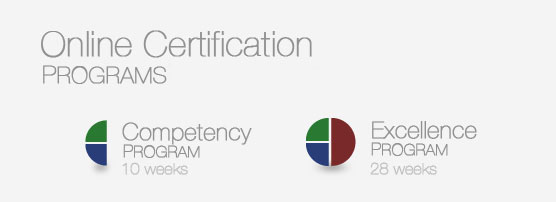
Program Description:
Key Roles & Responsibilities:
- developed program goals and criteria
- created materials and learning objects
- established online course evaluative instruments for both online tracks
- managed the development of 40+ Blackboard training tutorials
- developed training schedules and goals
I co-managed all aspects of the Online Certification Program. My responsibilities included:
- facilitate three instructional modules
- monitor and assess faculty progress
- consult with faculty and assist them with issues related to course design
- provide faculty with guidance on pedagogy and effective course design practices
- review and revise the program to ensure that it remains timely and relevant
- oversee external review of courses
- assess the program’s effectiveness
Program Overview:
- participants: 19
Classroom.NEXT (2010)
Program Description:
Classroom.NEXT was a team-based competitive program that challenged Texas Wesleyan faculty and students to research and design their ideal classrooms. Through competition and collaboration, the CETL sought to challenge faculty to not only research and design classrooms, but to promote the use of learner-centered teaching methods and to advance instructors’ understanding of how classroom design impacts teaching and learning.
Key Roles and Responsibilities:
- design program goals and guidelines
- create program materials
- consult with participants
- oversee administrative and technical support
- manage technology implementation and support
Program overview:
- total number of participants: 23
Online Faculty Training Program (2007)

Program Description:
Faculty at Tarrant County College (TCC) are required to complete the Center for Distance Learning’s Online Faculty Training Program in order to teach an online course. This online three-module course introduces faculty to the district’s learning management system, LogiCampus, and provides them with an opportunity to learn and practice the skills required to be effective online instructors. During the program, faculty design and develop an online course which is reviewed by their peers to ensure that it meets the district’s Minimum Standards of Excellence.
Key Roles & Responsibilities:
- developed an 100% online version of the program
- developed program goals and criteria
- created materials and learning objects
- established online course evaluative instruments for both online tracks
- managed the development of 40+ LMS training tutorials
- developed training schedules and goals
- lead instructor several iterations of the training program
- provided faculty with guidance on pedagogy, effective course design practices, and the appropriate use of instructional technologies
- assisted in the revision of the certification program
Program overview/statistics:
- total number of participants: 100+
- 85% completion rate as lead instructor
Faculty Consultations
There are several general principles to my approach to faculty consultations:
- develop a professional relationship with faculty based on trust and reassure them that our interactions are confidential
- understand their specific needs and help them establish appropriate goals
- foster positive change by providing examples of innovative and effective approaches
- provide encouragement and opportunities for self-reflection
- find timely and accurate resources and tools
- assist in developing appropriate metrics to assess their progress towards established goals
Overview
Categories:
- Teaching Support – assisting faculty with an issue that does not require the development or modification of learning goals. Typically small teaching-related issues in an informal or formal setting.
- Teaching Consultation – a formal meeting with a faculty member, usually to tackle a teaching challenge or to try new teaching approaches.
Consultation Types:
- One-on-one – scheduled meetings in an formal or informal setting. We discuss the issue and develop a plan of action based on the faculty member’s needs.
- Group Consultations – scheduled meetings with a group of faculty or department to address specific issues.
- Teaching observation – a model where I observe the faculty member’s course, provide feedback, and collaborate with them to develop solutions to improve their teaching.