
08 Jul Open Content
Creative Commons
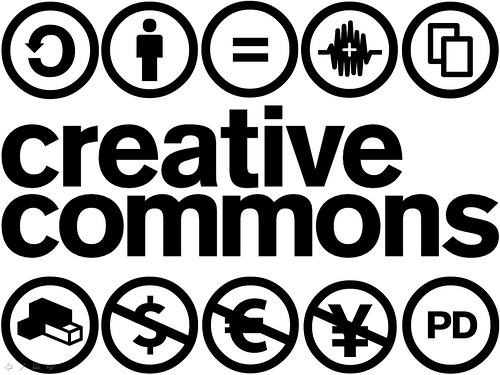
In January, Educause Learning Initiative released their annual Horizon Report. It identified six areas of emerging technologies likely to impact teaching and learning in higher education over the next several years (For more information, view our 2010 Horizon Report blog post back in January). Number 2 on their list was open content, which in this case refers to the practice of placing fewer or specific copyright restrictions that encourage sharing on materials used for teaching and learning. The open content concept is thriving in higher education because allows the world’s teaching and learning community to be more communicative and collaborative. Institutions such as MIT and Harvard Business School have published their content free online for the past several years. The Creative Commons licensing has helped facilitate this movement by allowing content developers to express the levels of “rights retained” for any content they produce.
If you are interested in learning more about open content, visit http://www.opencontent.org/. The website contains a number of related resources including a blog, wiki, and an open online course repository. Take a moment to look at the open courses offered in your discipline.
Another great resource I found is MERLOT (http://www.merlot.org/), a free and open online community of resources designed for higher education faculty, staff, and students to share learning materials and resources (from the MERLOT website). MERLOT provides many resources such as community mentoring based on discipline, peer reviewed learning objects and materials, and virtual guest speakers. If you believe in openness and collaboration amongst peers, I encourage you become a member of MERLOT and begin sharing your expertise and materials with others.
Openness is a practice we strongly support in the CETL. We have adopted our own Openness policy and share any resources we produce under the Creative Commons license. For more information on creative commons, visit http://creativecommons.org/. Also, if want to see who else is using the open concept in education, I found a list of 101 open courseware projects for you to browse.
Have a great week!
Arturo
Sorry, the comment form is closed at this time.